
Canadian Citizenship Status: Am I a Citizen or Not?

Deprecated: Function get_the_author_ID is deprecated since version 2.8.0! Use get_the_author_meta('ID') instead. in /var/www/sites/lawfirmbackup_200125/wordpress/wp-includes/functions.php on line 6131
Do you have a Canadian parent but you do not live in Canada? Are you unsure if you are eligible for Canadian citizenship status?
Canada has a similar, but not identical mixture of citizenship by place of birth (for those born in Canada) and by descent (for those with at least one Canadian) parent to the US. However, there are certain exceptions both in terms of who is entitled to a Canadian citizenship to begin with, as well as who can inherit said citizenship.
In this article, our immigration law office will clarify some of the complicated questions surrounding Canadian citizenship laws, specifically regarding the transmission of citizenship to further generations, your children and grandchildren.
We will first examine who is considered a citizen, who is not considered a citizen, and significant considerations. We will then explain the first-generation limitation, its exceptions, as well as how current events in Canadian politics will impact the future of citizenship for varying generations. For further information regarding other ways to travel, work, or reside in Canada, our website has plenty of information to guide you.
Who is considered a citizen?
According to the 1977 Canadian Citizenship Act, several criteria can make one eligible for Canadian citizenship:
- You were granted citizenship after being eligible to apply (for example, in the case of permanent residents)
- You were born in Canada
- You were granted citizenship due to changes to the Citizenship Act (to be discussed further below)
- You were born abroad, but at least one parent was either born in Canada or became a citizen before your birth
- You were granted citizenship when a parent or guardian applied on your behalf when you were a minor
Who is not considered a citizen?
You are likely not a citizen if:
- You were born in the Canada to diplomats from other countries
- Your citizenship is fraudulent
- Your citizenship was revoked (for a number of possible reasons)
Other Classifications
You may live in Canada temporarily or permanently without receiving citizenship on the spot if you:
- Marry a Canadian citizen
- Are a permanent resident
- Were adopted by Canadian citizens
- Have received official refugee status in Canada
- Are a second generation Canadian not living in Canada (to be expanded upon below)
As such, it is important to take the necessary steps and do research to find out how you can apply for citizenship when classifying under one of the above categories.
Citizenship Through Generations
If at least one of your parents was born in Canada and you were born abroad, you are also eligible for Canadian citizenship. However, it is important to note that for first-generation citizens living abroad, you must apply to ‘retain citizenship’ and declare that you are still invested in remaining a Canadian citizen from abroad before you reach the age of 28, otherwise you will lose your citizenship status on your 28th birthday .
First-Generation Limitation
In 2009 and 2015, amendments made to the Canadian Citizenship Act altered the existing laws of who could be granted citizenship and under which circumstances. Although there were numerous changes made, relevant to our case is the first-generation limitation of 2009. This amendment holds that second-generation individuals born outside of Canada (i.e., those whose grandparents were the last generation in your family to live in Canada) are no longer eligible for Canadian citizenship. This poses relevance for people whose grandparents made Aliyah from Canada and gave birth to their children in Israel.
Omissions from the First-Generation Limitation
As we have previously stated, citizenship does not get passed beyond the first-generation not residing in Canada. However, there are a few exceptions to this rule that may apply to you:
- You were born outside of Canada but at least one of your Canadian parents was employed as a civil servant abroad, for example, with the Canadian Armed Forces.
- When at least one of your parents was born, at least one of your grandparents was employed as a civil servant abroad.
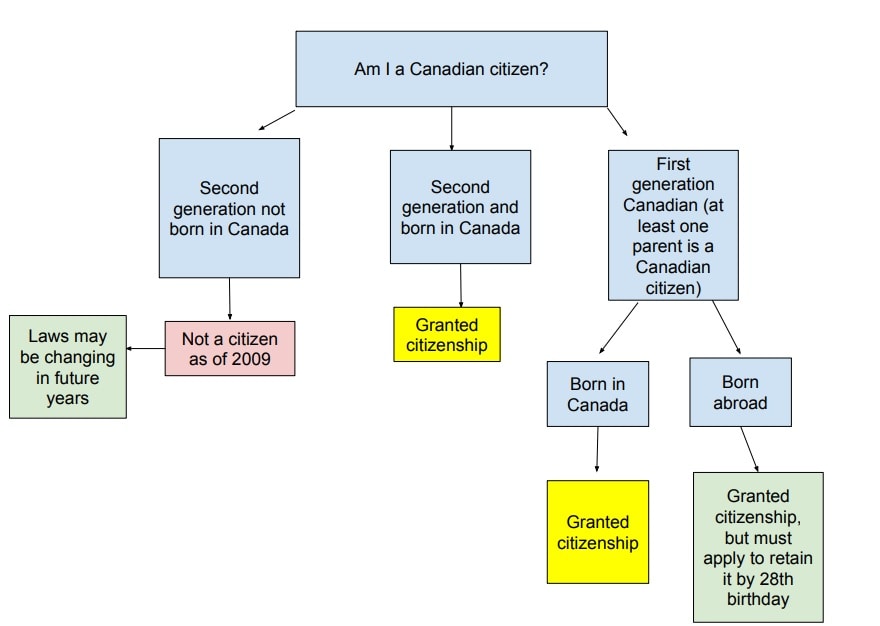
Citizenship in the Headlines
As previously mentioned, the 2009 amendment to the Canadian Citizenship Act limited generations ahead that could be citizens. However, it is possible that the laws will change in future years; On May 23, 2024, Bill C-71, an Act to amend the Citizenship Act, passed its first reading in the House of Commons, and now must go through several more readings before being passed as a law. C-71 would allow for second-generation individuals born outside of Canada to be granted citizenship. For example, if someone born in Israel’s grandparents made Aliyah, the grandchildren may be able to be granted citizenship, along with the parents.
The act also poses relevance to people known as “Lost Canadians” who were unable to apply before due to previous laws that were changed in 2009 and 2015. This act could have an impact on people with Canadian grandparents and parents residing abroad, particularly in Israel, but who themselves are not considered Canadian citizens.
What if I’m not eligible for citizenship through my family?
If you have no Canadian parents, it is possible to apply for various visas to Canada, depending on if you are interested in Canadian work, travel, education, or residence.
In summary:
Throughout this article, we have paid attention to larger themes of Canadian citizenship, zooming in on being granted citizenship through family members.
Finding the right immigration attorney with experience in Canadian immigration and citizenship may be the best step you can take for yourself to secure your citizenship or to navigate complex Canadian legislation from abroad. Our attorneys are experienced professionals who will be happy to help you throughout your citizenship application

 :
: :
:מאמרים מומלצים